Have you ever felt like your emotions were running the show — like they were too unpredictable or hard to control? You’re not alone. Many struggle with emotional ups and downs that impact their daily lives and relationships. Learning to regulate emotions is a skill, and Dialectical Behavior Therapy (DBT) is a powerful tool that can help.

Emotions play a big role in relationships and how we interact with others. When emotions are running rampant, relationships often suffer. In relationships, people who struggle with emotional regulation may react impulsively and lash out in anger which causes tension to form in relationships.
On the other hand, some people deal with emotional dysregulation by shutting down completely. Instead of expressing their emotions, they suppress them, making it hard to connect with them. This emotional distance can lead to loneliness and difficulty forming close relationships.
Whether emotions are expressed too intensely or not at all, emotional dysregulation can make it hard to maintain healthy relationships with friends, family, and romantic partners.

Dialectical Behavior Therapy (DBT) was developed by psychologist Marsha Linehan to help people struggling with emotional dysregulation, particularly those diagnosed with Borderline Personality Disorder (BPD). However, DBT has since been adapted for many different mental health conditions dealing with intense feelings and emotions.
DBT is based on the idea that people need both acceptance and change to build a life worth living. It combines cognitive-behavioral techniques with mindfulness strategies to target building control over emotions, behaviors, and relationships. In a recent Harvard Health article on DBT, Dr. Blaise Aguirre, a renowned DBT expert says, “The mindfulness aspect of DBT teaches people to pay careful attention to the nature, quality, and volume of their thoughts. The idea is to observe these thoughts as separate from yourself without identifying with their meaning.” Through understanding how our thoughts impact us, we are better equipped to deal with emotions in a healthy way.
DBT teaches practical skills to manage emotions, reduce impulsive behaviors, and improve relationships. The goal of DBT is not to suppress emotions but to help people experience and manage them in a way that allows them to manage conflict and challenges better.
DBT follows a specific curriculum and layout with one of the main components being skills training falling under four keystone modules – mindfulness, distress tolerance, emotion regulation,and interpersonal effectiveness. These skills are taught in group therapy and reinforced in individual client sessions.
Mindfulness is the foundation of DBT. It helps people stay present in the moment without judgment – to themselves or others. Many people who struggle with emotional regulation either get stuck in the past or worry about the future, which can make emotions more intense. By practicing mindfulness, people can observe their emotions and acknowledge them without reacting impulsively.
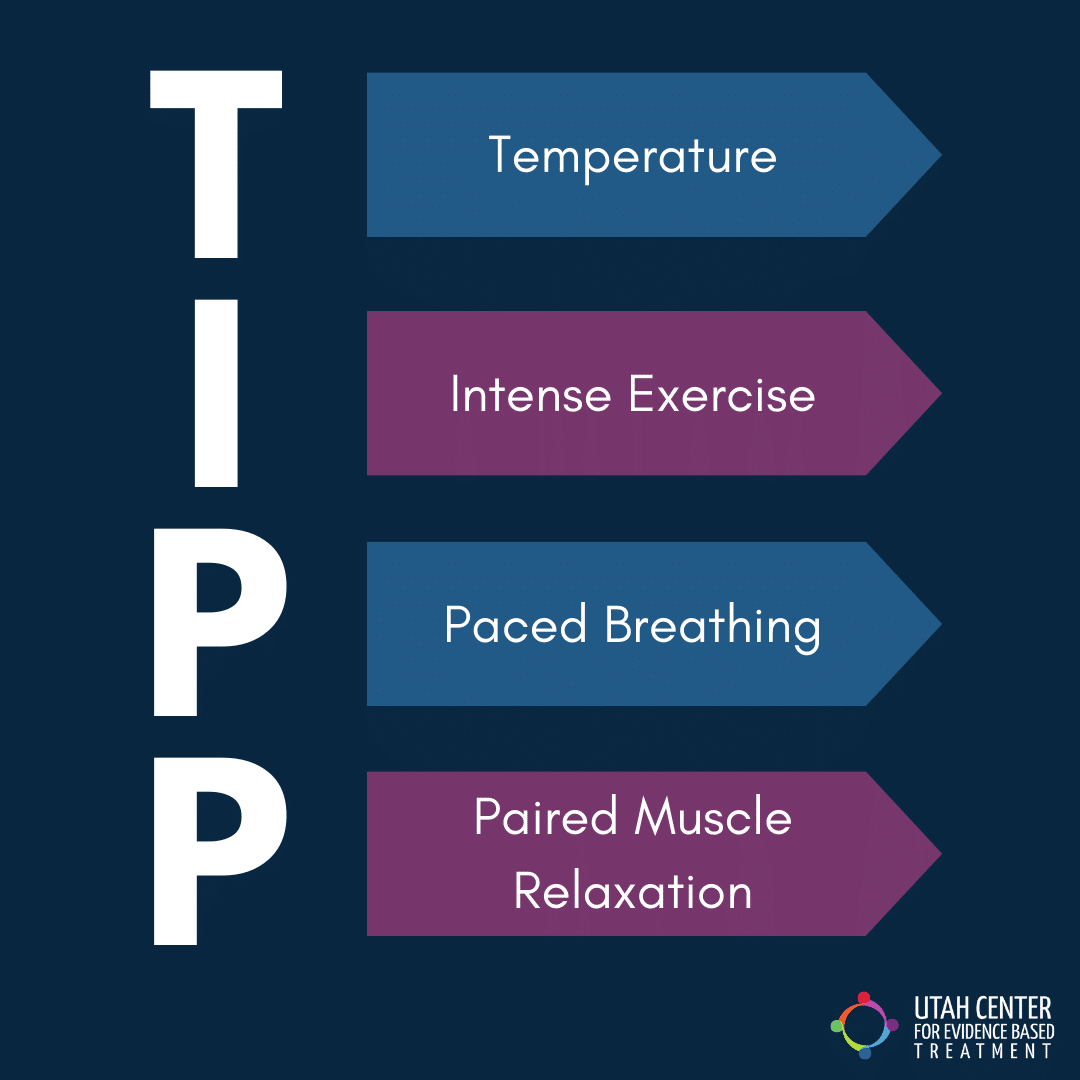
Distress tolerance skills help people get through difficult emotions or triggers without making the situation worse. One popular distress tolerance skill is the TIPP skill:
These skills help people change their emotional responses over time. DBT Licensed therapist Dr. Jessica Flynn likes to use orchids as an analogy for those with high emotional volatility: “When we think about a person coming into DBT, they’re often a person who’s very similar to an orchid. Biologically, they have a lot of needs. They have a very high emotional sensitivity, a lot of meaning that they’re going to be very sensitive to a lot, a range of emotional stimuli that somebody else might not be.” Others are more like dandelions and can handle a variety of emotional environments. DBT helps “orchid-like” individuals find ways to manage their emotional sensitivity in a healthy way.
Some key emotion regulation skills include:
Behavioral Tech Institute– the founding organization of DBT highlights the importance of Emotion regulation in the DBT framework on their blog. In The Role of Emotion Regulation in DBT, Dr. Sara Schmidt explains that when someone has a difficult time regulating their emotions it is akin to “a toddler trying to drive a Ferrari”. Through approaching emotions as something that is always valid and justified DBT seeks to change thinking patterns in a way where clients feel less quick to judge both themselves and others.
With emotional dysregulation, relationships are one of the most difficult things to manage, even if your intentions are pure. DBT teaches interpersonal effectiveness skills to help people ask for what they need, set boundaries, and navigate conflicts in a way that respects both themselves and others.
While DBT was originally designed for BPD, research has shown that it can also be effective for:
Even if someone does not have a formal diagnosis of BPD or another mental health condition, DBT can still be beneficial for improving emotional awareness and regulation. At its core, DBT aims to help people navigate everyday challenges—from managing stress at work to improving communication in relationships.
Emotional regulation is a skill that anyone can learn. If you struggle with intense emotions, DBT offers structured, research-backed techniques to help.
If you think DBT might be helpful for you, consider reaching out to the UCEBT team who can match you with one of our qualified DBT specialists and programs. For a self-paced option, look into our Online DBT Skills Course, which guides you through all of the skills and tips that are found in the standardized DBT curriculum. With the right skills and support, emotional regulation is possible—and so is a life worth living.
Start with a free consultation to ask questions and see if DBT is a good fit for you.
