ADHD is a neurodevelopmental condition characterized by difficulties with attention, focus, and impulse control. It can impact daily life, affecting school, work, and personal relationships. At UCEBT, we take a strengths-based approach, helping clients harness their unique abilities while providing evidence-based techniques to manage symptoms effectively.
ADHD is categorized into three subtypes: 1) Predominantly Inattentive Presentation, 2) Predominantly Hyperactive Presentation, and 3) Combined Presentation. All types can have both inattentive and hyperactive presentations, but there may be more traits in some areas vs. others. There is no longer a diagnosis of ADD (Attention Deficit Disorder)- it is now ADHD predominantly inattentive type.
What does ADHD look like in children?
In children, ADHD can manifest as needing increased movement and stimulation seeking, often making it difficult to sustain focus on a task or to participate in a classroom setting. These children are often identified early, due to the disruptive nature of their behaviors making it difficult to engage in family and school life. However, children can also struggle with inattentiveness, in that they may hyperfocus on interests and have difficulty starting tasks unless they are interested. They often procrastinate and finish tasks last minute, but because they are still turning in assignments and testing well, can actually do well through most formal schooling. Interpersonally, these individuals may be known as having “no filter”- often speaking what they think without stopping to consider impact on others. Strengths include creative pursuits and a willingness to dive into new things.
If traits are unidentified, many adults with ADHD struggle with burnout due to chronic overfunctioning. They may have been able to be quite successful and have jobs and families, but the increased demands of life are difficult to manage and can manifest as anxiety, depression, and addiction. This is why identification is so important.
At UCEBT we want to support our clients in obtaining meaningful lives that are sustainable and consistent with their values.
Our evidence-based treatments for ADHD include Cognitive Behavioral Therapy (CBT) and executive functioning coaching. These methods help clients build focus, improve organization, and develop practical skills for managing symptoms in daily life.
If there are significant co-occurring behavior problems in children, we may recommend methods like parent coaching or parent-child interaction therapy (PCIT). Impulsive adolescents and adults with emotion dysregulation challenges would do well with Dialectical Behavior Therapy (DBT).
Training video from Dr. Laura Rowley:
Back-to-School Playbook: Evidence-Based Strategies for Helping Neurodivergent Kids and Teens Succeed
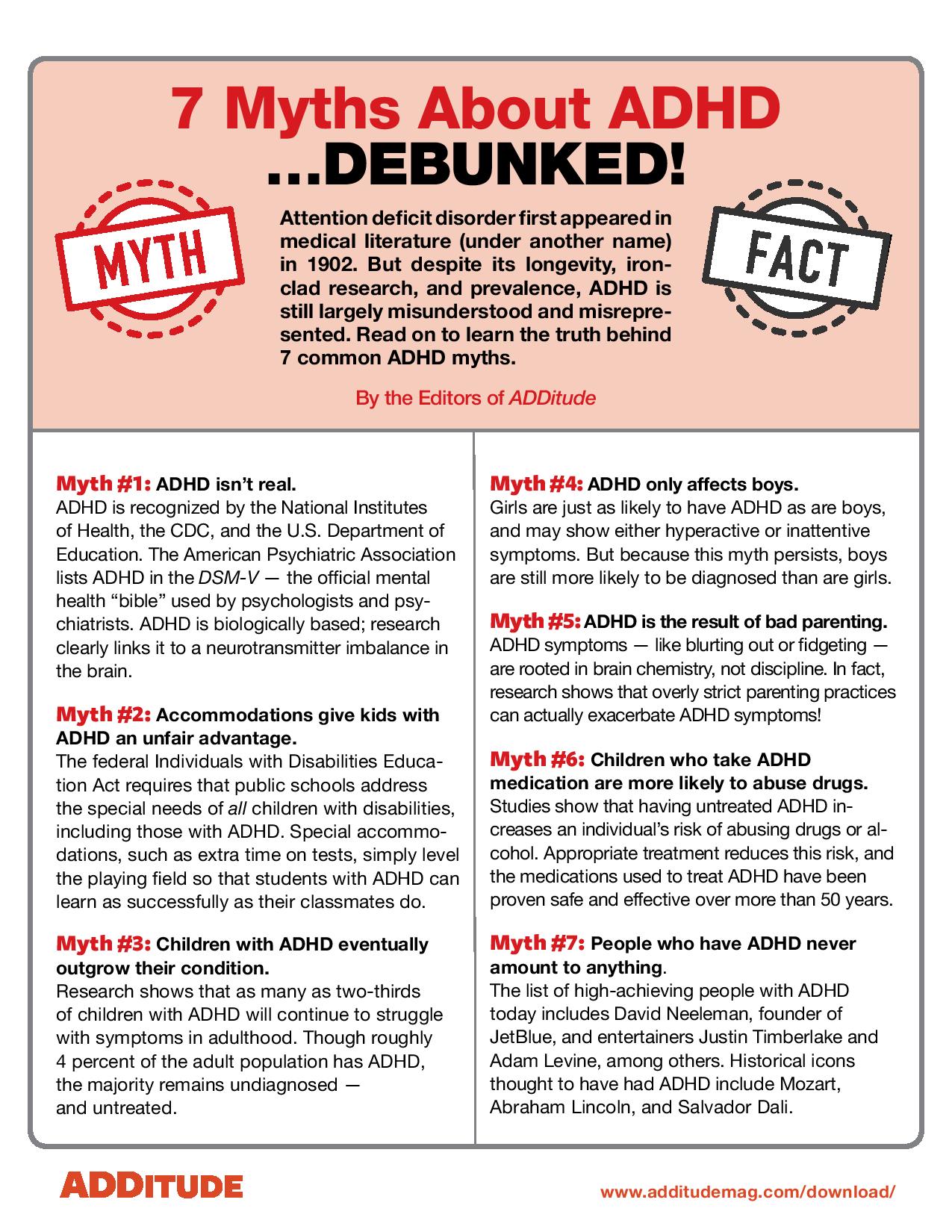
From the ADDitude Directory, this graphic (below) discusses some of the most common myths about ADHD. For more fantastic resources available to download, check out ADDitude’s Free Downloads page. ADDitude is a wonderful, evidence-based ADHD resource and UCEBT is also a proudly a member.
Also from the ADDitude website, learn about some of the most recent statistics regarding ADHD.
For example, did you know that 9.4% of children in the United States between ages the 2 to 17 are estimated to have been diagnosed with ADHD?
Check out the ADDitude Statistics page for more statistics regarding ADHD and:
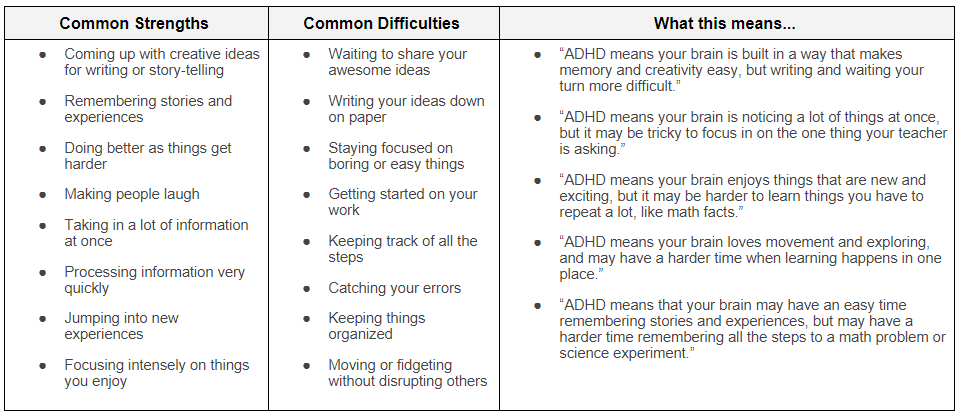
This chart was acquired from a webinar by Dr. Liz Angoff, attended by UCEBT’s Assessment & Testing Program Director, Laura Rowley Ph.D., who specializes in working with people who have ADHD and Autism.
Regarding processing speed, Dr. Rowley clarifies that “processing speed is a complex ability that encompasses multiple components. Individuals with ADHD can react quickly to things, but sometimes they aren’t accurate. They can also process quickly when the information is relatively simple compared to neurotypicals. So they are fast thinkers but fast isn’t always better, depending on the situation”. Here is a related research study, “Which components of processing speed are affected in ADHD subtypes?” https://pubmed.ncbi.nlm.nih.gov/30558479/
Complete our online screener to get started with one of our experienced and compassionate clinicians.
The unique mission of UCEBT is to improve the quality of mental health care by enhancing access to comprehensive evidence-based treatments, evaluations, and testing.
Quick Links
Visit Us
Business Address:
170 S 1000 E, Suite 201
Salt Lake City, UT
84102
Business Hours:
Monday
Tuesday
Wednesday
Thursday
Friday
Saturday – Sunday
9:00 am – 7:00 pm
9:00 am – 7:00 pm
9:00 am – 7:00 pm
9:00 am – 6:00 pm
9:00 am – 5:00 pm
Closed
© 2024 Utah Center for Evidenced Based Treatment. Powered by Big Red Jelly.