Length
2 hours
CE Credit
Not Available
Recorded
August 22, 2022
Back to school can be a stressful time for neurodivergent students and their families as they ready themselves for a new school year, but it is also an opportunity to create new habits and supports to help students thrive. This talk will cover how the COVID-19 pandemic affected learning for individuals with autism and Attention-Deficit/Hyperactivity Disorder and how students, parents, and teachers can work as a team to move forward with practical strategies for success.
Topics will include helpful accommodations in Section 504 and Individualized Education Plans, evidence-based classroom strategies that promote engagement, and skills to enhance relationships for students with their parents, teachers, and peers. Information includes tailoring intervention to the student’s development level, from children in elementary school to teens transitioning to college.

There are several ways to learn from this training. You can either watch the recording for free or take the self-paced course for CE credit. We also have the slides available to download.
(Free) You can watch the full recording of this training for free on our YouTube Channel. This is perfect if you’re not seeking CE credit or would like to preview the training before taking the course.
Follow along with the recording by downloading the presentation slides personal use.
However, please note that no part of the materials available through the Utah Center for Evidence Based Treatment may be copied, photocopied, reproduced, translated or reduced to any electronic medium or machine-readable form, in whole or in part, without prior written consent of the presenter and creator of the presentation. Contact info@ucebt.com for questions.
At the conclusion of this presentation, attendees should be able to identify how #ADHD and Autism affects school functioning and list practical strategies for parents, teachers, and students to enhance academic performance.
Learning Objectives:
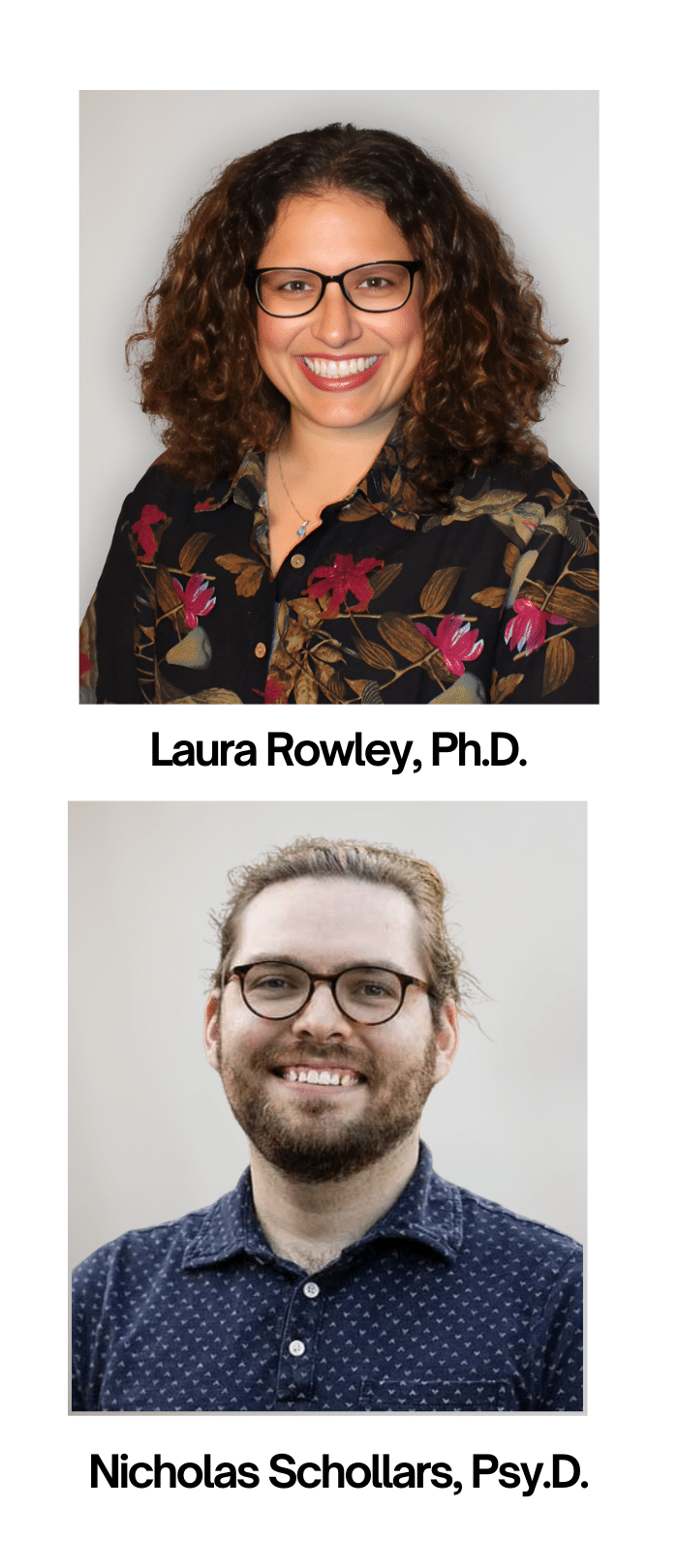
Laura Rowley, Ph.D. is a licensed clinical psychologist. Laura obtained her doctorate from Wayne State University. She completed her APA-accredited internship and postdoctoral fellowship at Primary Children’s Hospital. Laura was the Program Director for the Assessment and Testing Team at Utah Center for Evidence Based Treatment, where she specialized in testing services for neurodiverse children and adults.
Nick Schollars, Psy.D. is a licensed clinical psychologist. Coming from Newberg, Oregon, he completed his doctorate at George Fox University and his APA Internship at Saint Elizabeths Hospital in Washington, DC.
Adams, D., Young, K. & Keen, D. Anxiety in Children with Autism at School: a Systematic Review. Rev J Autism Dev Disord 6, 274–288 (2019). https://doi.org/10.1007/s40489-019-00… ADDitude. Success at School for Children with ADHD and Learning Disabilities. 2012. Additudemag.com.
Davis, N.O., Kollins, S.H. Treatment for Co-Occurring Attention Deficit/Hyperactivity Disorder and Autism Spectrum Disorder. Neurotherapeutics 9, 518–530 (2012). https://doi.org/10.1007/s13311-012-01…
DuPaul GJ, Chronis-Tuscano A, Danielson ML, Visser SN. Predictors of Receipt of School Services in a National Sample of Youth With ADHD. Journal of Attention Disorders. 2019;23(11):1303-1319. doi:10.1177/1087054718816169
Keen D, Webster A, Ridley G. How well are children with autism spectrum disorder doing academically at school? An overview of the literature. Autism. 2016;20(3):276-294. doi:10.1177/1362361315580962
Mayes, S.D., Waschbusch, D.A., Calhoun, S.L. et al. How Common are Academic Overachievement and Underachievement in Children with Autism or ADHD?. J Dev Phys Disabil 32, 775–783 (2020). https://doi.org/10.1007/s10882-019-09…
Rando, Heather; Huber, Mary J.; Oswald, Gina R.. An Academic Coaching Model Intervention for College Students on the Autism Spectrum. Journal of Postsecondary Education and Disability, v29 n3 p257-262 Fall 2016 Tamm, L., Duncan, A., Vaughn, A. et al. Academic Needs in Middle School: Perspectives of Parents and Youth with Autism. J Autism Dev Disord 50, 3126–3139 (2020). https://doi.org/10.1007/s10803-019-03…
Ziegler Dendy, C., &Bailey E. The Ultiamte ADHD Toolkit for Parents & Teachers. Additu.de/school
We have provided expert virtual trainings and self-paced courses for
continuing education credit since 2020 on a variety of evidence-based topics.
The unique mission of UCEBT is to improve the quality of mental health care by enhancing access to comprehensive evidence-based treatments, evaluations, and testing.
Quick Links
Visit Us
Business Address:
170 S 1000 E, Suite 201
Salt Lake City, UT
84102
Business Hours:
Monday
Tuesday
Wednesday
Thursday
Friday
Saturday – Sunday
9:00 am – 7:00 pm
9:00 am – 7:00 pm
9:00 am – 7:00 pm
9:00 am – 6:00 pm
9:00 am – 5:00 pm
Closed
© 2024 Utah Center for Evidenced Based Treatment. Powered by Big Red Jelly.
