
This article has been reviewed for clinical accuracy by Dr. Rachel Armstrong
Bringing home a new baby changes almost every part of life. Feeling worried, overwhelmed, or uncertain doesn’t mean you’re doing anything wrong, but sometimes those worries become more than the normal adjustment to parenthood.
Many new parents expect to feel exhausted after childbirth. What often surprises them is just how much they worry:
These thoughts are incredibly common. Becoming responsible for a tiny human naturally comes with new concerns and new responsibilities. But when worry becomes constant, difficult to control, and begins interfering with daily life, it may be a sign of postpartum anxiety.
Understanding the difference between normal adjustment and postpartum anxiety can help parents recognize when additional support may be helpful.

Researchers often use the term perinatal anxiety as an umbrella term for anxiety disorders that occur during pregnancy or within the first year after childbirth. One type is generalized anxiety disorder with postpartum onset, meaning symptoms begin after childbirth and meet the criteria for generalized anxiety disorder. Postpartum anxiety is more than simply caring about your baby’s wellbeing. Instead, the worries become difficult to quiet, even when others provide reassurance.
Yes! One of the most important points from Dr. Armstrong’s presentation is that some anxiety is a normal part of becoming a parent.
The first weeks after birth involve tremendous adjustment. Parents are learning new routines, recovering physically, sleeping less, and caring for a newborn around the clock.
Many people experience:
These experiences are often part of the normal adjustment to parenthood.
According to Dr. Rachel Armstrong, postpartum anxiety may include:
For many parents, the worries center on their baby’s safety. Questions like…
…can replay over and over throughout the day.
The difference is not whether you worry. It’s how much the worry begins affecting your life.
Postpartum anxiety develops when the anxiety becomes more intense and begins having greater impacts on a person’s mental and physical wellbeing and daily life.
You may notice:
Rather than gradually becoming more confident, you may feel increasingly trapped by worry.
There isn’t one single cause.
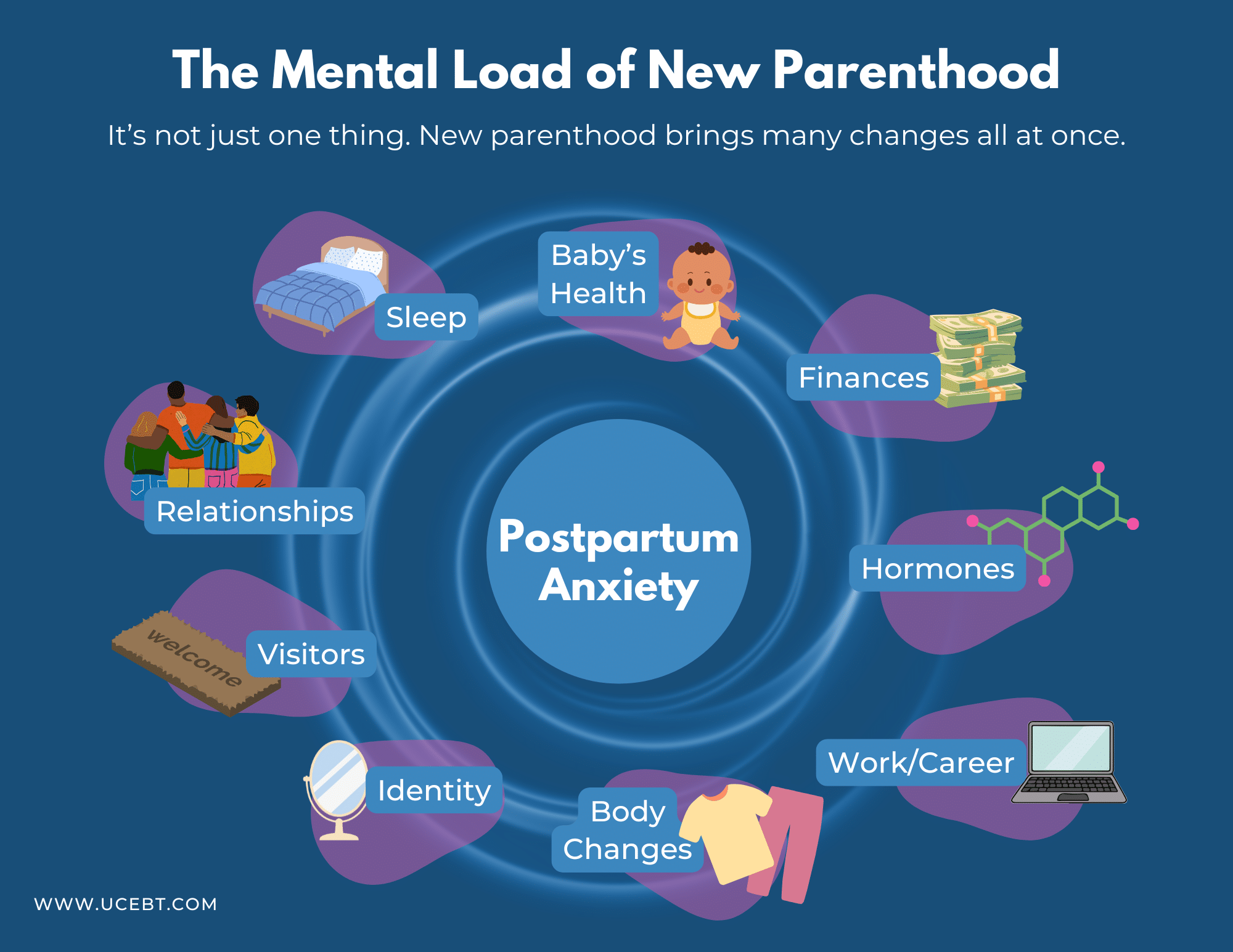
Instead, pregnancy and the postpartum period involve many changes happening all at once.
Dr. Armstrong describes this time as one of tremendous intersectionality, where multiple physical, emotional, and social changes occur simultaneously.
These changes may include:
Rumination is a constant repetition of a negative thought or a negative theme that can impact our mood and even our physical health. People often replay the same worries repeatedly. They may review past events trying to understand them or spend hours imagining future problems that haven’t happened. Instead of helping solve problems, rumination often increases emotional distress.
Generalized anxiety disorder with postpartum onset affects approximately 4.4% to 10.8% of mothers. Perinatal anxiety is estimated to affect 8.5% to 10.5% of mothers.
The broader category of perinatal anxiety likely includes more people because it encompasses several anxiety disorders that occur during pregnancy and after childbirth.
If your worries are becoming difficult to control, interfering with sleep, affecting your ability to enjoy time with your baby, or making everyday life feel overwhelming, it’s worth talking with a mental health professional.
You do not need to wait until things become unbearable. Getting support early can help prevent anxiety from becoming even more disruptive.
The encouraging news is that postpartum anxiety is treatable.
Our providers use several evidence-based approaches that may help, including:
Treatment is not about eliminating every worry. It’s about helping parents regain confidence, reduce anxiety, and feel more present in their lives and with their families.
Adjusting to life with a new baby can be one of the biggest transitions a person experiences. Some worry is part of that adjustment. But if anxiety has begun taking over your thoughts, your sleep, or your daily life, you don’t have to manage it by yourself.
At UCEBT, our clinicians provide evidence-based treatment for postpartum anxiety, postpartum depression, obsessive-compulsive disorder, reproductive trauma, and other perinatal mental health concerns. Whether your anxiety began during pregnancy or after childbirth, compassionate, effective support is available.

Dr. Rachel Armstrong obtained her doctorate from William James College in Boston, MA. She received training and clinical experience in behavioral health interventions and health psychology, including training in clinical hypnosis for IBS, biofeedback assisted relaxation training, and behavioral medicine interventions. She completed her APA-accredited internship at LifeStance Health where she gained experience working in integrated behavioral health settings. Currently, Dr. Armstrong is a postdoctoral fellow at UCEBT.
Persistent anxiety isn’t something you have to simply “push through.” With the right support, many parents find lasting relief and rediscover moments of calm and connection.
