
The Dialectical Behavior Therapy (DBT) “burning house” metaphor developed by Marsha Linehan explains the four stages of DBT. From surviving behavioral crisis and suicidality to processing trauma, improving long-term functioning, and building joy, the stages of DBT are designed to help clients move toward a life worth living.
Key Points:
As Dr. Kimberly Applewhite explains, DBT was originally developed for individuals experiencing chronic suicidality and intense emotional suffering. At the center of DBT is a core dialectic: clients are often “doing the best they can,” while also needing “to do better, try harder, and be more motivated to change.”
Rather than viewing destructive behaviors as manipulation or failure, DBT understands them as survival strategies and helps clients build a life worth living instead.
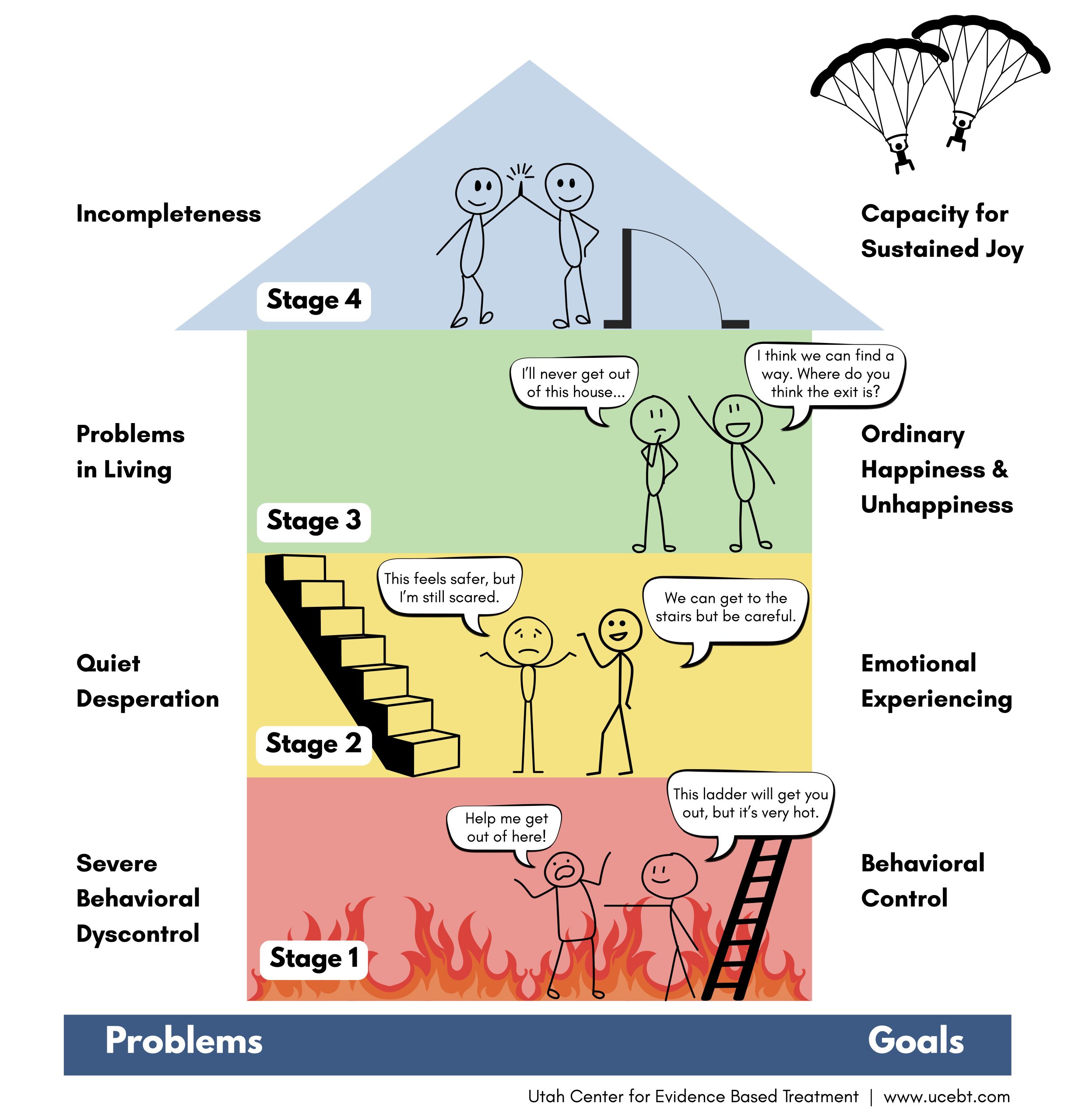
This is the “burning house” stage of DBT. Clients are often experiencing suicidality, self-harm, impulsive behaviors, emotional crisis, or severe instability. The focus is on safety, reducing dangerous behaviors, and learning skills to survive intense emotions more effectively.
Dr. Kimberly Applewhite, our DBT Program Director, says “Those who come to DBT, it’s kind of like they’re in a burning house. Oftentimes when people think of DBT, they think of Stage One DBT, which is the one with all of the different modes of treatment. But it’s also when people experience or present with their highest level of crisis behaviors like suicide ideation or parasuicidal behavior. It’s like being in the basement, and the only way out is to use skills… but using skills is like putting your hand on a metal ladder. Everything is hard when you have a lot in your life that you need to change, but then you’re in a situation that needs to be changed almost immediately. So the core problem in Stage One is behavioral dyscontrol.”
Once life-threatening behaviors decrease, clients often begin addressing deeper emotional pain and unresolved trauma. This stage focuses on processing painful experiences rather than simply surviving them.
In this stage, the focus shifts toward long-term functioning and quality of life. Clients work on issues like depression, relationship patterns, self-esteem, ADHD, career struggles, or ongoing emotional difficulties that continue impacting daily life.
Stage Four focuses on building a deeper sense of meaning, connection, freedom, and joy. Rather than just reducing suffering, the goal becomes creating a life that genuinely feels fulfilling and worth living.
Dr. Applewhite explains, “At Stage Four, we’re just out the trap door of the house waiting for our helicopter or parachute, and we’re looking at how we can keep joy in our lives.”
Our providers regularly provide staff trainings, workshops, and consultation to businesses in a variety of sectors. We also support Employy Assistance (EAP) Wellness programs with therapy and assessment services.
