
This article has been reviewed for clinical accuracy by Dr. John Barr
Gut-directed hypnotherapy uses guided relaxation, visualization, and verbal suggestions to address digestive symptoms. For people with irritable bowel syndrome (IBS), treatment focuses on concerns such as pain, discomfort, and bowel functioning.
The idea of hypnosis may feel unfamiliar or uncomfortable. Understanding what happens during treatment can help you decide what to ask before getting started.

Gut-directed hypnotherapy is a form of medical hypnosis that uses relaxation and imagery specifically related to digestive symptoms.
As Dr. Rachel Armstrong explains, people enter a hypnotic state through “guided visualization and guided relaxation techniques.” The clinician then uses imagery and suggestions focused on how the gut feels and functions.
This makes treatment more specific than a general relaxation exercise. The imagery is connected to goals such as reducing discomfort, supporting more comfortable bowel activity, and changing automatic reactions to digestive sensations.
Its relevance to IBS comes from the communication between the digestive system and the brain. For more background on that relationship, read How Stress Affects Your Gut: Understanding the Gut–Brain Connection.
If your picture of hypnosis comes from a stage performance, you may wonder whether you could be made to act strangely or follow instructions you would normally refuse. Clinical hypnosis has a different purpose. Dr. Armstrong emphasizes that people retain control during the experience:
“They can get out of the hypnotic trance anytime they want and they’re not gonna do anything that they don’t want to do while they’re in the hypnotic state.”
Discussing these concerns with the clinician is part of understanding the treatment before participating.
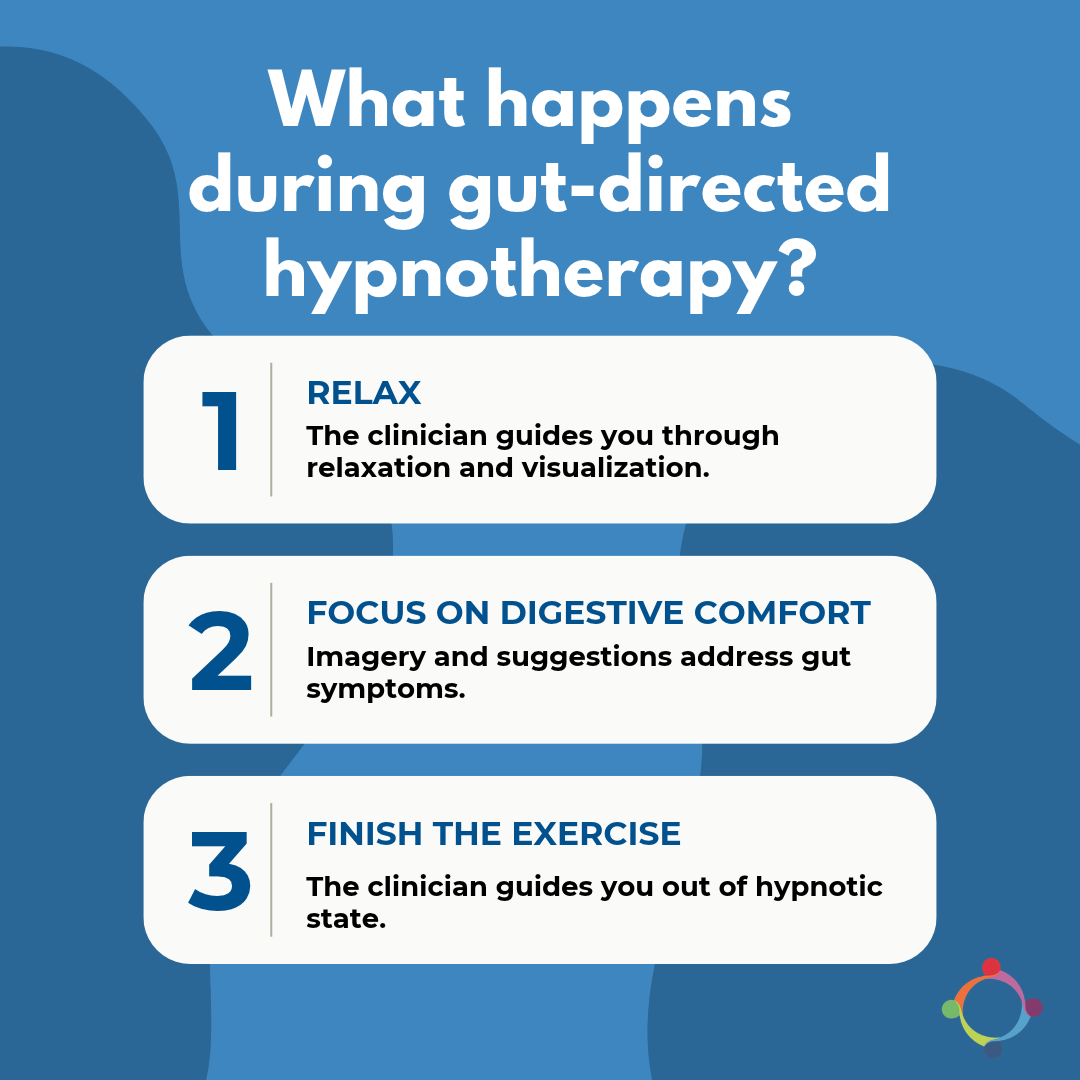
The clinician begins by guiding you through relaxation and visualization. Once you are relaxed, additional imagery helps deepen that experience before the focus moves toward your digestive symptoms. Rather than asking you simply to “relax your stomach,” the clinician may use a scene that makes comfort or protection easier to imagine.
Dr. Armstrong describes an example from the North Carolina Protocol, a gut-directed hypnosis protocol developed by Olafur Palsson. The imagery involves a warm, comfortable mountain cabin that offers shelter from a storm outside. The clinician connects that sense of shelter and comfort to the person’s digestive experience. The purpose is to link the imagined scene with suggested changes in sensitivity, pain, or discomfort.
As Dr. Armstrong explains, “That kind of imagery is directly linked to suggested symptom change.” The wording describes the changes treatment aims to support. It should not be understood as a promise that discomfort will disappear.
Before guiding you out of the hypnotic state, the clinician offers what are called post-hypnotic suggestions: statements intended to support changes beyond the exercise itself.
In Dr. Armstrong’s example, these suggestions describe the intestines functioning with a steady, comfortable rhythm. Other goals she discusses include reducing the frequency or intensity of symptoms and increasing a sense of well-being. The session concludes with the clinician guiding you out of the hypnotic state.
In her presentation, Dr. Armstrong identifies the North Carolina Protocol as an evidence-based approach to gut-directed hypnosis. She describes research showing improvements in both gastrointestinal symptoms and quality of life.
That distinction matters because digestive symptoms can affect much more than physical comfort. Worry about needing a bathroom, uncertainty about eating away from home, and ongoing pain can interfere with everyday activities. Quality of life considers how someone is managing and experiencing daily life alongside their symptoms.
Dr. Armstrong also explains that imagery within the protocol aims to increase a person’s sense of control and reduce automatic negative reactions to gut sensations. These are reasons to explore the treatment with a qualified clinician. They do not establish what any one person’s outcome will be or mean that the same approach is appropriate for every digestive condition.
A recommendation for psychological treatment does not mean digestive symptoms are imagined. Dr. Armstrong discusses how people can experience significant symptoms even when testing does not reveal a clear structural explanation and how dismissing those experiences can make seeking care harder.
Her presentation places psychotherapy within a broader approach to gastrointestinal care, including medical treatment when appropriate. Gut-directed hypnotherapy addresses a specific part of that care through guided relaxation, imagery, and symptom-focused suggestions. If you are unsure why it has been recommended, ask how it relates to the symptoms you experience and your existing treatment plan.
Dr. Armstrong notes that training courses and certification programs are available for clinicians learning to practice clinical hypnosis. She also distinguishes clinical hypnosis from mindfulness or guided imagery exercises that may use some similar techniques.
When contacting a provider, useful questions include:
These questions can help you understand the provider’s approach and what participation would involve before deciding whether to begin.

Dr. John Barr uses Gottman methods and emotion-focused techniques when working with couples. He has expertise treating trauma, anxiety disorders, OCD, depression, somatic symptom and chronic pain struggles, especially as they overlap with trauma. This work is rooted deeply in evidence-based practice, where he incorporates Acceptance and Commitment Therapy (ACT), CBT-based psychotherapies, and formal and informal exposure-focused techniques.
Connect with UCEBT to learn about treatment options that may help you manage digestive symptoms and improve your quality of life.
