
This article has been reviewed for clinical accuracy by Dr. Rachel Armstrong
Have you ever noticed your stomach “tying itself in knots” before a big presentation? Or felt nauseous when you’re anxious or under a lot of stress?
These experiences aren’t just in your head. They reflect a very real connection between your brain and your digestive system.
In one of our recent trainings, psychologist Dr. Rachel Armstrong explained that researchers now understand the gut and brain to be in constant communication. This relationship, known as the gut-brain connection, helps explain why stress, anxiety, and other emotional experiences can have such a powerful effect on digestion.

One of the most fascinating discoveries in medicine is that your digestive system contains its own network of nerves called the enteric nervous system.
As Dr. Armstrong explains, “The enteric nervous system is embedded in the lining of the GI system and has an estimated 100 million-plus neurons that are involved.” This vast network of neurons communicates continuously with your brain.
“The enteric nervous system communicates with and influences the central nervous system,” Dr. Armstrong says, adding that this is “where a lot of research on the interactions between gut health and mental health are done.”
Because of this constant communication, what happens in your brain can influence your gut, and what happens in your gut can influence your brain.
Scientists refer to this two-way communication system between your gut and your brain as the gut-brain axis.
According to Dr. Armstrong, “The gut-brain axis is the connection between our gut and our brain, and it’s really modulated by that enteric nervous system, the vagus nerve, neurotransmitters, and our emotional experience as well as the gut microbiota.” Rather than working independently, these systems are constantly exchanging information.
“When the GI tract is functioning properly,” she explains, “it produces chemicals and beneficial hormones within the body that can positively influence our mood, help us navigate our stress response, and reduce inflammation.”
The opposite is also true. “When there’s things like anxiety or stress that might negatively impact our body,” Dr. Armstrong says, “it can offset the balance of gut bacteria.”
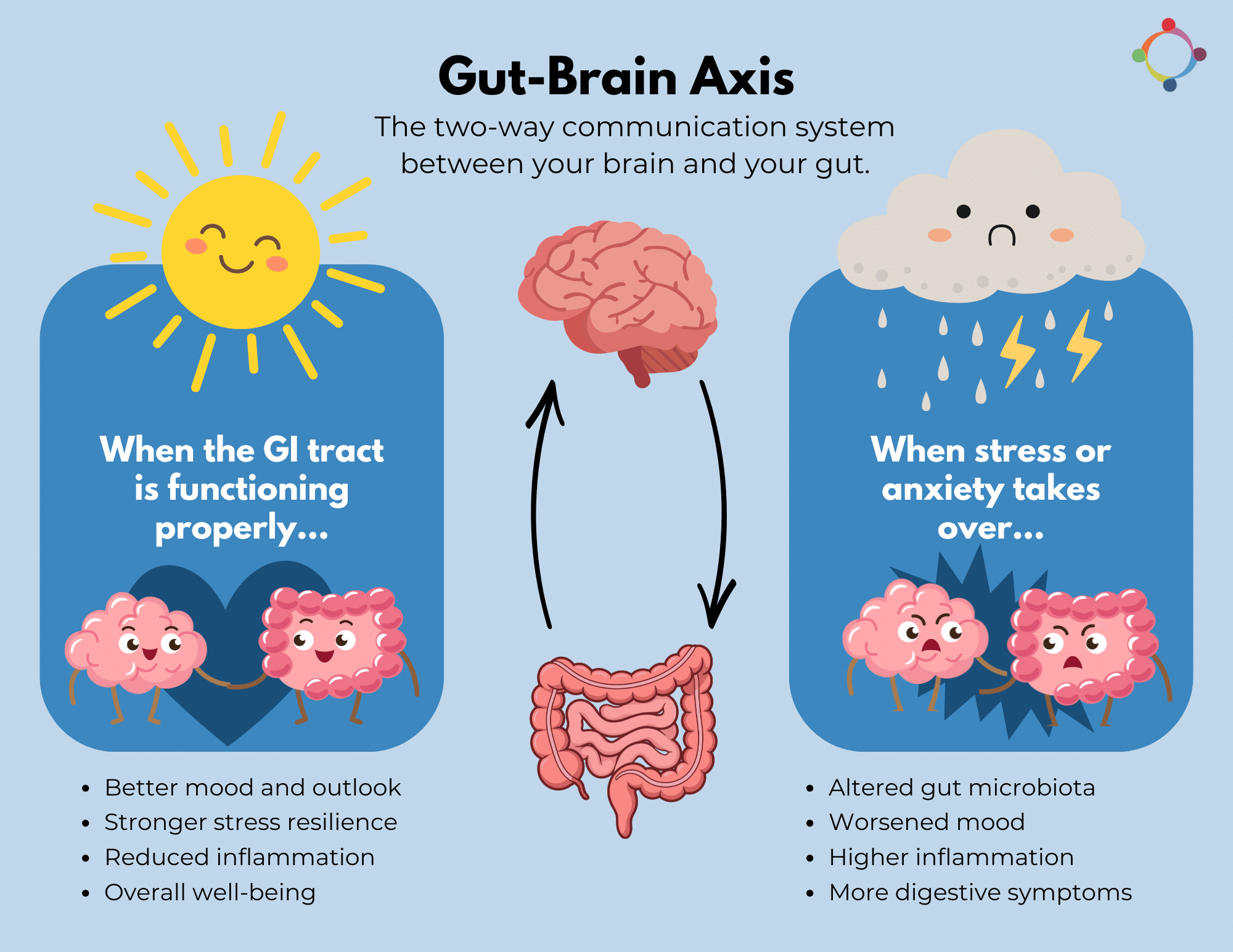
Stress affects much more than your emotions. It changes how your digestive system functions in several important ways. In fact, stress has been proven to:
She explains that stress “reduces the blood flow within our body, decreases the secretions and replenishment of mucosal lining in our gut, decreases the muscle contractions and the motility within our gut tract as well, and can negatively impact that visceral perception, increasing the pain that people experience in their gut.”
Over time, chronic stress may also alter the balance of bacteria living in the digestive tract, which researchers believe may further influence both physical and emotional health.
Many gastrointestinal conditions involve something called visceral hypersensitivity, meaning the digestive system becomes unusually sensitive to normal sensations. For someone living with a digestive disorder, even normal digestive activity may feel painful or alarming.
Researchers have also found increased activity in brain regions involved in pain perception among people with conditions such as irritable bowel syndrome (IBS). As Dr. Armstrong notes, this can result in people “experiencing more pain in the gut” and even “experiencing pain or discomfort in response to clinically normal bowel functions.”
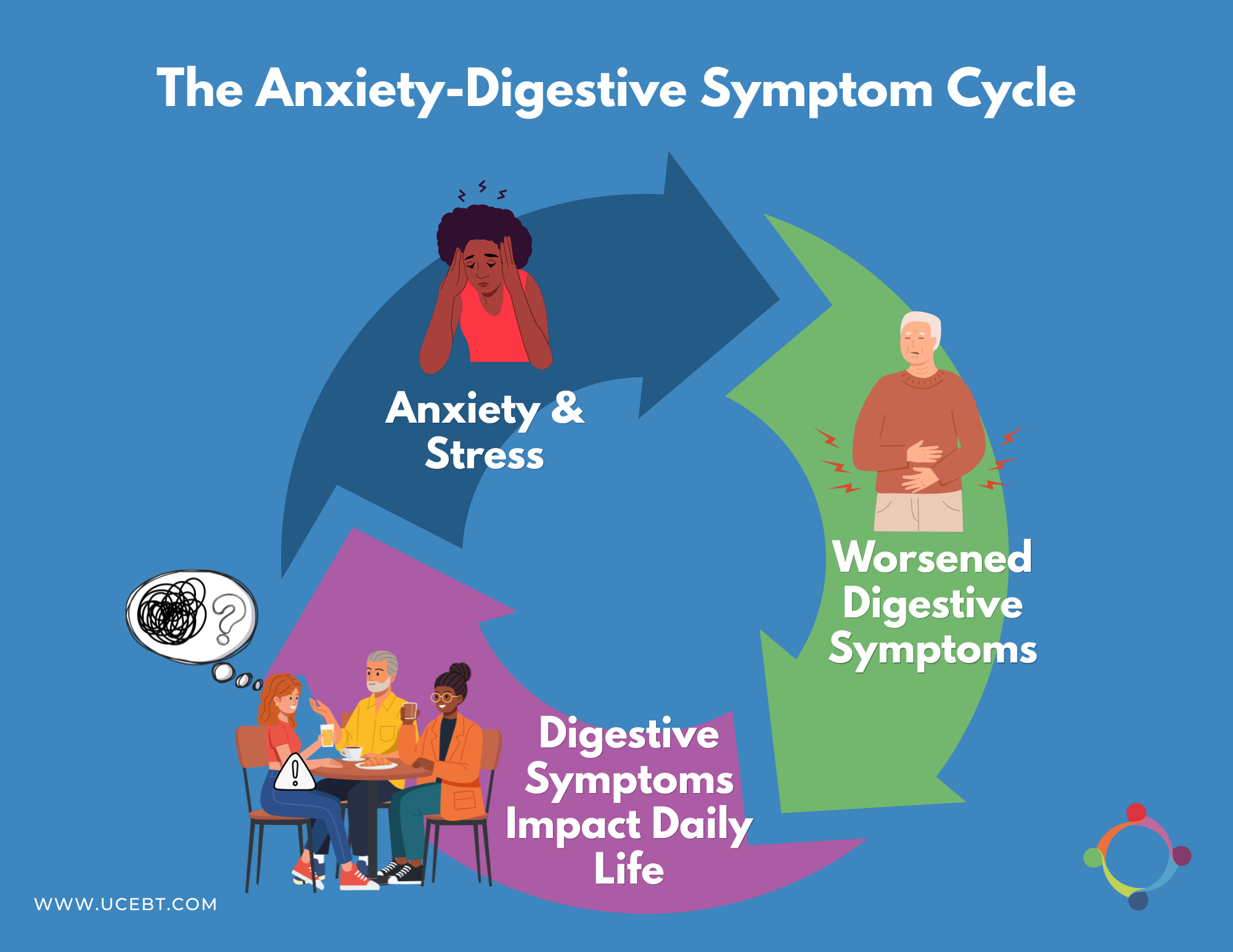
Unfortunately, the relationship between anxiety and digestive problems often becomes a cycle. Digestive symptoms can create uncertainty about everyday activities like eating at restaurants, traveling, or attending social events. That uncertainty increases anxiety, and increased anxiety can worsen digestive symptoms.
Dr. Armstrong points out that many people with gastrointestinal disorders experience anxiety because “It’s not comfortable to not know if you’re gonna have to run to the bathroom at a restaurant… to experience pain and discomfort for so much of your day-to-day life… There can be this very large negative impact on our quality of life if you experience a GI disorder.”
One way to interrupt this cycle is by intentionally activating the parasympathetic nervous system, often called the body’s rest and digest system. Dr. Armstrong recommends diaphragmatic breathing because it helps activate the vagus nerve.
“Diaphragmatic breathing is a breathing exercise that helps to activate the vagus nerve, which in turn activates the parasympathetic nervous system, which is otherwise called the rest-and-digest system.”
Rather than breathing shallowly into the chest, diaphragmatic breathing encourages slow breaths into the abdomen with longer exhalations, helping the body shift out of “fight or flight” mode. Relaxation techniques such as progressive muscle relaxation can also reduce stress and promote healthier digestive functioning.

Many people are surprised to learn that psychotherapy has become an evidence-based treatment for several gastrointestinal disorders. But that doesn’t mean digestive symptoms are “all in your head.” Instead, therapy helps address the very real communication between the brain and digestive system.
Dr. Armstrong notes that psychotherapy has “far more evidence showing the benefit” than many alternative treatments when used alongside appropriate medical care. Research supports several psychological approaches, including:
These approaches help reduce stress, improve coping, change unhelpful thought patterns, and decrease the cycle of anxiety and symptom amplification that many people experience.
Your digestive system and your brain are deeply connected! Stress doesn’t simply affect your mood, but it also influences your nervous system, your gut bacteria, your digestive function, and even how your brain interprets pain.
As researchers continue to learn more about the gut-brain connection, they’re finding increasing evidence that treating digestive disorders often means caring for both physical and emotional health.
If you’re living with ongoing digestive symptoms, working with both medical providers and mental health professionals may provide a more comprehensive approach to improving your quality of life.

Dr. Rachel Armstrong obtained her doctorate from William James College in Boston, MA. She received training and clinical experience in behavioral health interventions and health psychology, including training in clinical hypnosis for IBS, biofeedback assisted relaxation training, and behavioral medicine interventions. She completed her APA-accredited internship at LifeStance Health where she gained experience working in integrated behavioral health settings. Currently, Dr. Armstrong is a postdoctoral fellow at UCEBT.
Living with chronic digestive symptoms can be overwhelming. Connect with one of our evidence-based providers who specialize in health psychology to learn how psychological treatment can complement your medical care and improve your quality of life.
