
This article has been reviewed for clinical accuracy by Dr. Rachel Armstrong
The answer may lie in two systems that regulate sleep: your sleep drive, which builds your need for sleep throughout the day, and your circadian rhythm, the internal clock that influences when you feel alert or sleepy.
Understanding how these systems work together is also an important part of Cognitive Behavioral Therapy for Insomnia (CBT-I), an evidence-based treatment that helps people identify and change patterns that may be interfering with sleep.
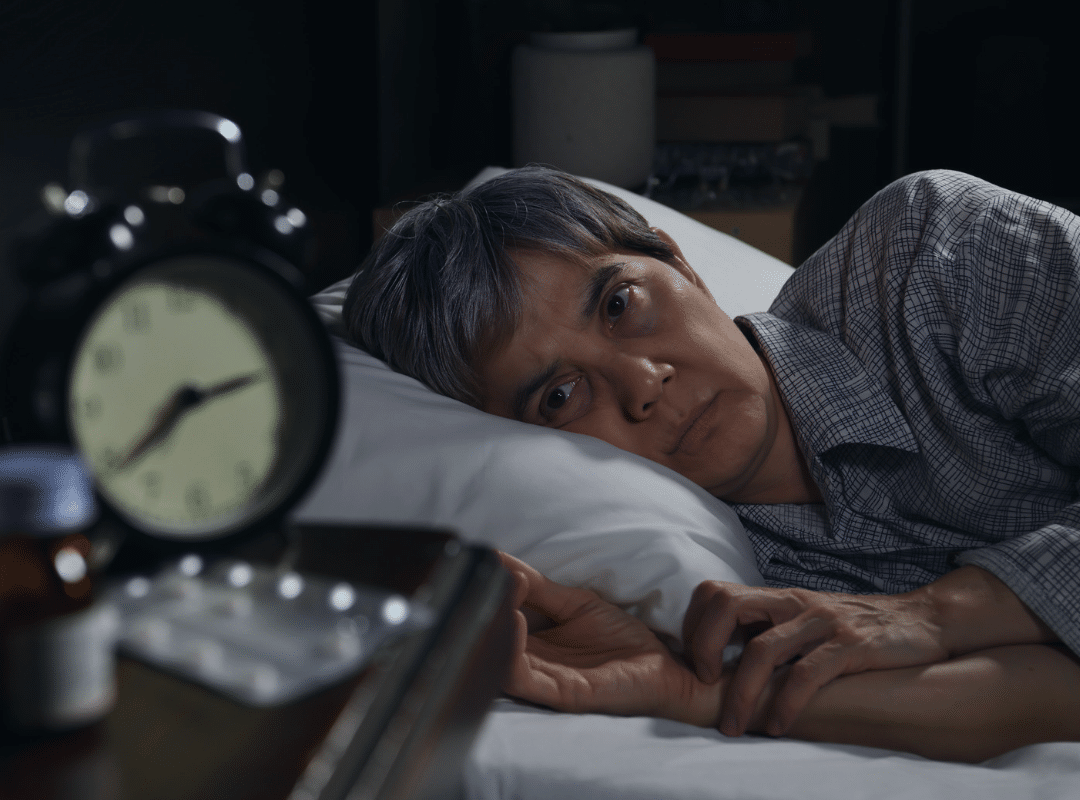
We often use tired and sleepy to mean the same thing, but there can be an important difference.
You might feel tired after a demanding workday, a stressful week, or hours of concentrating. You may have little energy and desperately want to rest. But that doesn’t necessarily mean your body is ready to fall asleep at that particular moment.
This distinction can be especially frustrating for people who experience insomnia. They may feel fatigued throughout the day but struggle to fall asleep once they get into bed. Others fall asleep easily but wake repeatedly during the night or earlier than they would like.
Daytime functioning is an important part of understanding insomnia, too. Difficulty sleeping can be accompanied by fatigue, difficulty concentrating, reduced attention, or other problems functioning during the day.
An occasional stretch of poor sleep isn’t necessarily chronic insomnia. But when trouble falling asleep or staying asleep persists and interferes with daytime functioning, it may be worth discussing with a healthcare professional.
To understand why you can be exhausted and still struggle to sleep, it helps to look at the two systems working behind the scenes.
One way researchers understand sleep is through the two-process model of sleep regulation. In simple terms, the model describes two processes that interact to influence when we sleep and wake.
As described in one of our provider trainings, “Sleep is a system. It’s designed to function in a rhythm with a whole bunch of different components of your body.”
Sleep drive, sometimes called sleep pressure, is the body’s gradually increasing need for sleep. Generally, the longer you remain awake, the stronger that pressure becomes. Sleeping reduces it.
Imagine getting up at 5 a.m. and staying awake all day without taking a nap. By 10 p.m., you have been awake for 17 hours. Under ordinary circumstances, you would expect your sleep drive to be much stronger than it was at noon. After you sleep, that pressure decreases and the process begins again.
This helps explain why spending more time in bed doesn’t necessarily produce more sleep. If you aren’t physiologically ready for sleep, simply giving yourself additional opportunities to sleep may not solve the problem.
Your sleep drive doesn’t operate by itself. At the same time, your circadian rhythm helps regulate when your body promotes alertness and when it becomes more prepared for sleep.
Your circadian rhythm is an internal biological clock influenced by environmental signals, particularly light. Throughout the day, your body goes through predictable changes associated with wakefulness and sleep.
This means sleep isn’t controlled simply by how many hours have passed since you last slept. Your body also has an internal sense of when it expects to be awake and when it expects to sleep.
Think of sleep drive and circadian rhythm as two systems working together. Your sleep pressure may be building because you’ve been awake for many hours, while your circadian system may still be promoting alertness. Sleep tends to come more easily when these processes are working together rather than competing with one another.
Once you understand these two systems, the experience of being tired but unable to sleep starts to make more sense.
Your daily behaviors, schedule, and natural sleep tendencies can affect how well your sleep drive and circadian rhythm line up. The effect isn’t identical for everyone, which is one reason understanding your own patterns can be so useful.
Most people know caffeine can interfere with sleep, but the amount and timing that cause problems can vary considerably from person to person.
During the sleep presentation, the speaker described discovering that he was more sensitive to caffeine than he had expected. Drinking green tea around 5 p.m. was sometimes followed by not falling asleep until 1:30 or 2 a.m.
The lesson isn’t that everyone needs the same caffeine cutoff. Instead, pay attention to how your sleep responds.
If you frequently feel exhausted but become alert around bedtime, consider tracking when you consume coffee, tea, energy drinks, or other sources of caffeine. You may discover that changing the timing makes a difference.

You may be physically tired at the end of the day while your mind remains highly engaged.
For example, working after about 8 p.m. or eating dinner too late may interfere with your sleep. However, it’s important to note that not every sleep recommendation affects everyone in exactly the same way.
Instead of building an increasingly complicated list of rules about what you’re “allowed” to do before bed, pay attention to patterns. A buffer between demanding activities and bedtime may help you notice whether your body is actually becoming sleepy and what behaviors seem to affect that transition.
Some people naturally prefer earlier bedtimes and wake times, while others tend toward later ones. These tendencies are sometimes described as chronotypes.
A person with a strong evening preference may naturally want to go to sleep later and wake later in the morning. Unfortunately, work, school, parenting, and other responsibilities don’t always cooperate with that schedule.
Someone with an evening chronotype may struggle to fall asleep when attempting an early bedtime because their circadian system is still promoting wakefulness. Then an early alarm forces them awake before they feel ready.
Understanding your natural tendencies doesn’t mean you can ignore the schedule your life requires. But it can help explain why certain schedules are particularly difficult and why simply going to bed earlier doesn’t always make you fall asleep earlier.
One of the most frustrating things about sleep is that effort doesn’t always help.
If you have an important meeting tomorrow and tell yourself, I absolutely have to fall asleep right now, that urgency doesn’t necessarily make sleep arrive faster. You may instead begin checking the clock, calculating how many hours you have left, thinking about tomorrow, changing positions, and monitoring whether you’re getting any sleepier.
“We get so caught up in the effort of trying to fall asleep that we end up becoming not mindful of our own body.”
You might have originally gone to bed feeling tired. Twenty or thirty minutes later, however, you’re frustrated, mentally active, uncomfortable, and increasingly alert. Now you’re trying to force your body to do something that normally happens without conscious effort.
Mindfulness can be helpful here because it shifts the goal from forcing sleep to noticing what is actually happening. Are you sleepy? Are you alert? Is your mind racing? Does your body feel tense? Have you moved from winding down into problem-solving mode?
That awareness can help you respond more effectively instead of escalating the struggle.
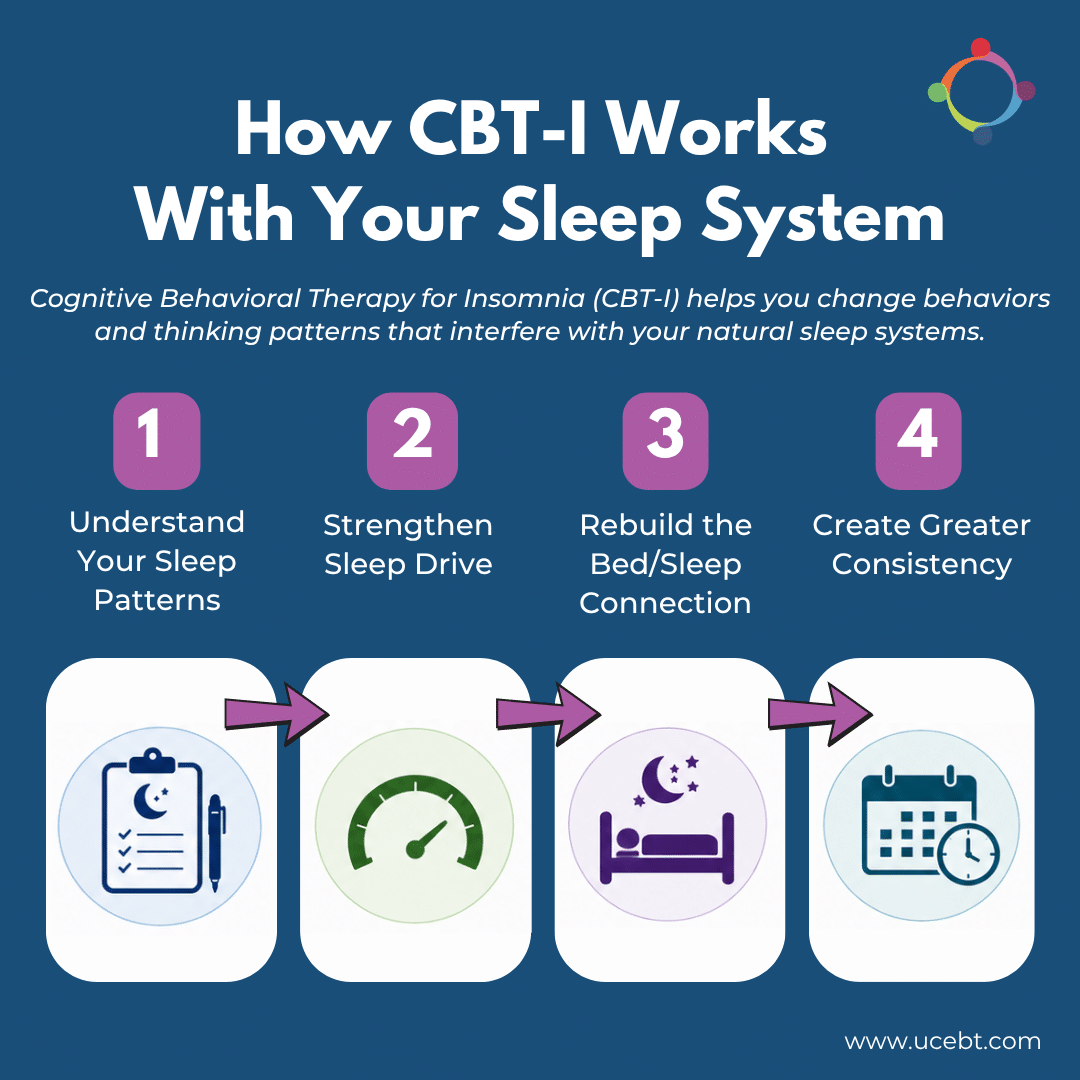
Cognitive Behavioral Therapy for Insomnia takes many of these ideas and turns them into a structured treatment.
CBT-I isn’t simply a better bedtime routine or a list of sleep-hygiene rules. It addresses thoughts and behaviors that can maintain insomnia while helping people work more effectively with the systems that regulate sleep.
The American Academy of Sleep Medicine (AASM) gives multicomponent CBT-I a strong recommendation for treating chronic insomnia in adults. CBT-I typically combines education about sleep regulation with cognitive and behavioral strategies such as stimulus control and sleep restriction therapy.
When sleep is unpredictable, it’s tempting to compensate. You might sleep late after a bad night, go to bed unusually early the next night, or change your schedule from day to day.
CBT-I instead places significant emphasis on consistency. In the presentation, participants were encouraged to determine a realistic wake time they could commit to and track their ability to maintain it.
The goal isn’t to create a perfect schedule overnight. Greater consistency gives your natural sleep system a more predictable pattern to work with.
For someone with chronic insomnia, the bed itself can gradually become associated with wakefulness. You lie in bed worrying, watch the clock, think about tomorrow, and try increasingly hard to sleep. Eventually, getting into bed may begin to trigger alertness rather than sleepiness.
Stimulus control is a CBT-I strategy designed to rebuild the association between bed and sleep. The AASM describes it as including strategies such as going to bed only when sleepy, getting out of bed when unable to sleep, and maintaining a consistent morning wake time.
The presentation summarized the goal as learning to “only go to bed when sleepy and start to associate the bed with sleep.”
That’s very different from getting into bed earlier simply because you’re worried you won’t get enough sleep.
Another component of CBT-I is sleep restriction therapy. Despite the name, the objective isn’t simply to deprive someone of sleep. It is designed to reduce excessive time spent awake in bed, strengthen sleep drive, and help consolidate sleep.
For example, someone might spend nine hours in bed but actually sleep for substantially less than nine hours because of long periods of wakefulness. In CBT-I, information from a sleep diary can help a clinician identify and address that pattern.
Sleep restriction can temporarily increase daytime sleepiness and isn’t appropriate to self-administer in every situation, so this component of CBT-I may require professional guidance.
Together, these strategies illustrate an important difference between CBT-I and generic sleep advice: the goal is to understand and change the processes maintaining insomnia, not simply to create the perfect nighttime routine.
One of the most useful ideas from the presentation was helping people become their own “sleep researcher.”
Rather than memorizing a long list of universal rules, you learn to observe your own patterns. A sleep log or sleep diary can help you record when you went to bed, approximately when you fell asleep, when you woke during the night, your final wake time, naps, caffeine use, and other factors that may have influenced your sleep.
Over time, you can start asking questions such as:
The point isn’t to scrutinize every night or become anxious about getting the numbers exactly right. You’re looking for patterns.
This individualized approach also helps explain why sleep hygiene alone isn’t considered a sufficient treatment for chronic insomnia. The AASM recommends against using sleep hygiene education as a stand-alone treatment. Multicomponent CBT-I goes further by addressing the behavioral and cognitive processes that can maintain insomnia.
The speaker described the overall goal of CBT-I this way:
“We want you out of here in seven weeks because you don’t need this group anymore. You’ve learned the skills, you know how to apply them.”
In other words, the goal is to develop an understanding of your own sleep and a set of skills you can continue using when problems arise.

Dr. Rachel Armstrong obtained her doctorate from William James College in Boston, MA. She received training and clinical experience in behavioral health interventions and health psychology, including training in clinical hypnosis for IBS, biofeedback assisted relaxation training, and behavioral medicine interventions. She completed her APA-accredited internship at LifeStance Health where she gained experience working in integrated behavioral health settings. Currently, Dr. Armstrong is a postdoctoral fellow at UCEBT.
CBT-I can help you uncover the patterns affecting your sleep and learn evidence-based strategies that work with your natural sleep system.
